

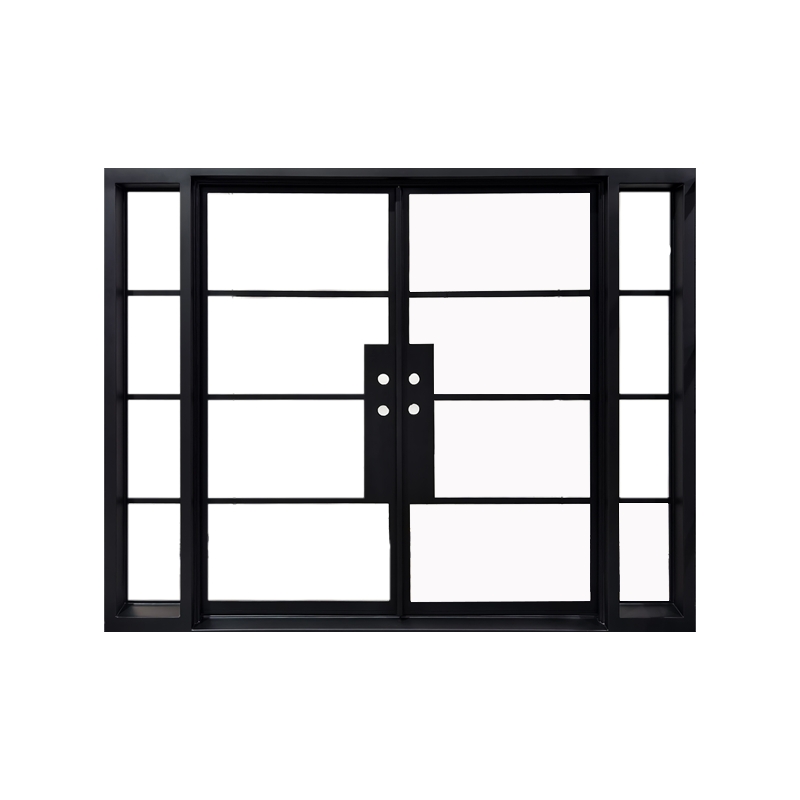
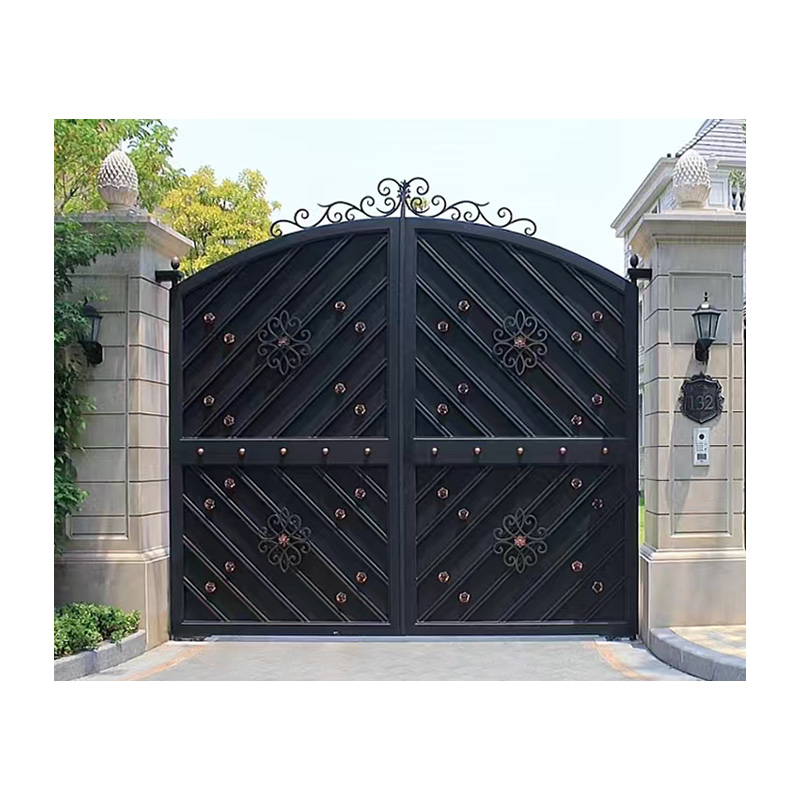
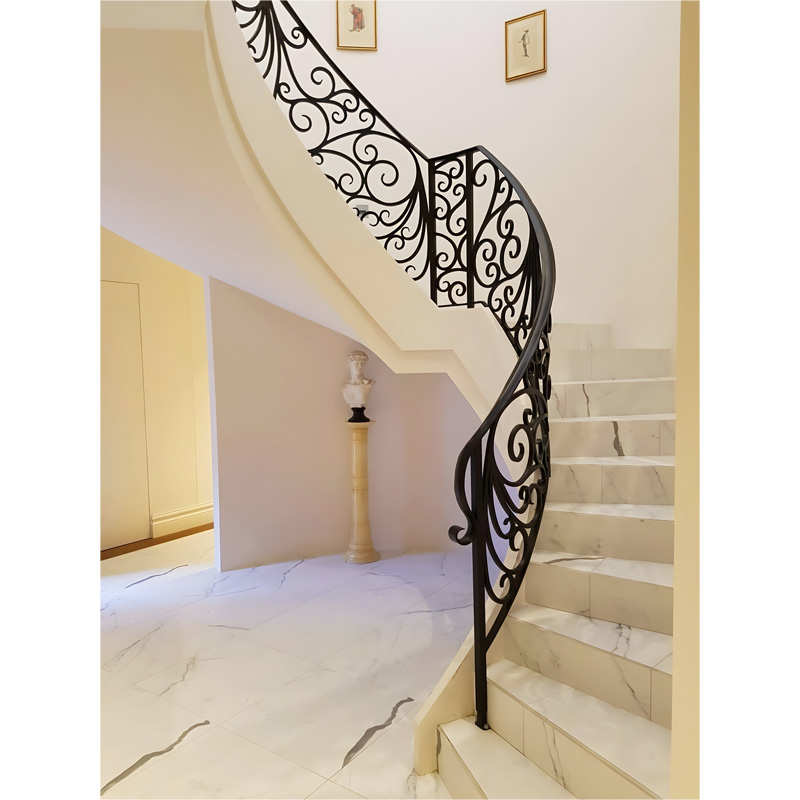
In today's European luxury construction market, customization has evolved beyond selecting colors and dimensions. Architects, developers, and private clients increasingly seek architectural elements that express identity, heritage, and exclusivity. As a result, Hand Forged Iron Doors have emerged as one of the fastest-growing segments in the premium entrance industry, offering a level of personalization that automated manufacturing simply cannot achieve.
Unlike standardized entrance products, Hand Forged Iron Doors transform architectural concepts into functional works of art. From historic estate renovations in France to contemporary luxury villas in Germany and bespoke residences in Italy, European buyers are increasingly investing in handcrafted entrance systems that combine traditional craftsmanship with modern engineering. This growing demand also drives the market for customized Wrought Iron Door systems, premium Iron Entry Doors, luxury Wrought Iron Front Doors, and architectural Wrought Iron Pivot Doors.
For manufacturers such as Xiamen Jin-Dary Iron Door Co., Ltd., the rise of customization represents a major opportunity to deliver highly specialized entrance solutions that satisfy the increasingly sophisticated requirements of European B2B customers.
The Era of Standardized Luxury Is Ending
Luxury architecture has undergone a fundamental transformation over the last decade. Affluent buyers no longer seek products that simply look expensive; they seek products that cannot be easily replicated.
This shift has dramatically increased demand for customized Hand Forged Iron Doors, which offer:
Individual artistic expression
Unique architectural identity
Limited production exclusivity
Personalized craftsmanship
Historical authenticity
Long-term value retention
European architects increasingly reject standardized entrance catalogs and instead collaborate directly with manufacturers to create bespoke Wrought Iron Door solutions that become integral components of architectural design.
Why Hand Forged Iron Doors Cannot Be Replaced by Automation
Advanced manufacturing technologies have transformed many industries, yet Hand Forged Iron Doors remain one of the few architectural products where human craftsmanship continues to provide irreplaceable value.
Unlike machine-produced products, handcrafted iron doors feature:
Organic Design Characteristics
Hand forging creates subtle variations in:
Curvature
Texture
Surface depth
Decorative detailing
Artistic proportions
These characteristics provide a level of visual authenticity that automated production cannot replicate.
Artistic Interpretation
Every Hand Forged Iron Doors project allows craftsmen to interpret design concepts through their experience and artistic judgment.
This creates:
Visual uniqueness
Emotional appeal
Architectural character
Premium brand perception
Architectural Flexibility
Traditional forging techniques allow manufacturers to produce highly customized forms that often exceed the capabilities of conventional production methods.
As a result, Hand Forged Iron Doors continue to occupy a unique position within the luxury building materials industry.
European Architects Demand Design Freedom
One of the primary reasons for the growing popularity of Hand Forged Iron Doors is their ability to support unrestricted architectural creativity.
European architects increasingly request:
Oversized entrance systems
Non-symmetrical designs
Organic decorative patterns
Historical reproductions
Contemporary sculptures
Custom artistic motifs
Traditional manufacturing limitations often prevent the realization of these concepts. However, handcrafted production methods allow designers to transform ambitious architectural ideas into practical entrance solutions.
This flexibility also benefits manufacturers of customized Iron Entry Doors, enabling projects that would otherwise be impossible using conventional production processes.
Historical Restoration Projects Drive Market Growth
One of the most important growth sectors for Hand Forged Iron Doors in Europe is architectural restoration.
Across Europe, thousands of historical properties require entrance systems that preserve architectural authenticity while meeting modern performance standards.
These projects include:
Historic villas
Heritage estates
Castle restorations
Boutique hotels
Religious buildings
Government properties
In many cases, replacement Wrought Iron Front Doors must be reproduced according to historical references, original drawings, or surviving architectural elements.
The ability to recreate historical craftsmanship accurately has become a significant competitive advantage for specialized manufacturers.
Luxury Developers Use Hand Forged Iron Doors for Brand Positioning
Modern luxury developments increasingly compete through exclusivity rather than size alone.
Developers now use Hand Forged Iron Doors to communicate:
Architectural prestige
Superior craftsmanship
Luxury positioning
Cultural sophistication
Design exclusivity
A handcrafted entrance system immediately distinguishes a project from mass-market developments.
As a result, many luxury residential communities incorporate customized Wrought Iron Door systems as signature architectural features.
These entrances often become focal points for:
Marketing campaigns
Architectural photography
Digital advertising
Luxury branding
Property presentations
Wrought Iron Front Doors Become Architectural Art Pieces
The traditional concept of entrance design is evolving rapidly.
Today, many architects treat Wrought Iron Front Doors as functional sculptures rather than conventional building products.
This approach has led to the development of:
Sculptural Entrances
Large-scale Wrought Iron Front Doors featuring:
Three-dimensional metalwork
Abstract geometric forms
Artistic layering
Textural contrasts
Integrated lighting
Cultural Design Concepts
Architects increasingly incorporate:
Regional symbolism
Historical patterns
Cultural references
Artistic traditions
Personalized motifs
Mixed Material Designs
Modern Wrought Iron Front Doors frequently combine:
Forged iron
Bronze
Natural wood
Stone
Glass
Stainless steel
These combinations create unique architectural experiences that support premium project positioning.
Iron Entry Doors Adapt to Individual Lifestyles
Modern luxury buyers increasingly expect personalized functionality in addition to customized aesthetics.
As a result, contemporary Iron Entry Doors can incorporate:
Biometric access systems
Smart home integration
Concealed security features
Acoustic insulation
Thermal efficiency systems
Automated operation
This integration of technology and craftsmanship allows manufacturers to create entrance systems tailored to individual lifestyles.
The flexibility of customized Iron Entry Doors enables architects to balance security, comfort, technology, and aesthetics within a single product.
Wrought Iron Pivot Doors Expand Design Possibilities
Among modern entrance innovations, Wrought Iron Pivot Doors have significantly expanded architectural design opportunities.
Unlike traditional hinged systems, Wrought Iron Pivot Doors offer:
Greater dimensional flexibility
Improved weight distribution
Minimal visual interruption
Monumental architectural scale
Enhanced visual drama
For architects seeking to create unforgettable entrances, Wrought Iron Pivot Doors provide extraordinary creative freedom.
Large-format pivot systems increasingly appear in:
Luxury residences
Designer villas
Private estates
Boutique hospitality projects
Executive commercial properties
The combination of handcrafted artistry and pivot engineering creates some of the most visually impressive entrance systems available today.
The Custom Design Process Begins with Collaboration
Successful Hand Forged Iron Doors projects require extensive collaboration between manufacturers and clients.
The development process often includes:
Concept Development
Design teams work closely with:
Architects
Developers
Property owners
Interior designers
Landscape designers
Engineering Evaluation
Technical teams assess:
Structural requirements
Opening dimensions
Material specifications
Security performance
Installation conditions
Artistic Development
Craftsmen refine:
Decorative details
Surface textures
Forging techniques
Material combinations
Finishing effects
This collaborative approach ensures that every Wrought Iron Door project achieves both artistic and engineering objectives.
Manufacturing Expertise Determines Final Quality
Producing premium Hand Forged Iron Doors requires a unique combination of industrial capability and traditional craftsmanship.
Professional manufacturers invest in:
Skilled artisans
Advanced engineering
Precision fabrication
Quality management
Surface treatment technology
International project support
At Xiamen Jin-Dary Iron Door Co., Ltd., experienced craftsmen and engineers collaborate to produce customized Wrought Iron Door, Iron Entry Doors, Wrought Iron Front Doors, Hand Forged Iron Doors, and Wrought Iron Pivot Doors for international markets.
This integrated manufacturing approach supports both artistic creativity and industrial reliability.
Sustainability Supports Handcrafted Manufacturing
European buyers increasingly value products with long life cycles and sustainable characteristics.
Premium Hand Forged Iron Doors naturally support environmental objectives because they offer:
Exceptional durability
Recyclable materials
Reduced replacement frequency
Long service life
Timeless aesthetics
Unlike trend-driven products, handcrafted iron entrance systems often remain desirable for generations.
This longevity reduces resource consumption while preserving architectural value.
The Future of Custom Architecture Is Handcrafted
Several emerging trends suggest continued growth for customized entrance systems:
Expansion of luxury residential markets
Increased demand for personalization
Growth in architectural restoration
Rising appreciation for craftsmanship
Greater emphasis on exclusivity
Expansion of bespoke construction
Continued interest in artistic architecture
As European architecture continues moving toward personalization and experiential design, Hand Forged Iron Doors will play an increasingly important role in shaping premium environments. Manufacturers capable of combining artistic craftsmanship, engineering expertise, and customized production will continue leading the development of innovative Wrought Iron Door, Iron Entry Doors, Wrought Iron Front Doors, and Wrought Iron Pivot Doors solutions for the global luxury market.
